SEO Tips
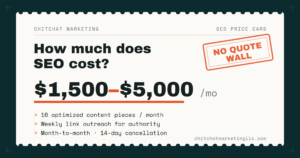
How Much Does SEO Cost? Our Actual Price Card
SEO costs $1,500 to $5,000 per month for most small and service-based businesses. At ChitChat Marketing, where you land in
SEO costs $1,500 to $5,000 per month for most small and service-based businesses. At ChitChat Marketing, where you land in
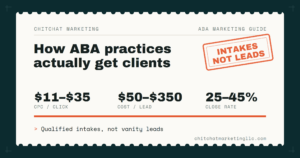
ABA practices get clients by running a consistent inbound lead system — intent-clustered SEO and Google Ads feeding cluster-specific landing

Compare the top time tracking software for agencies, including Teamwork, Harvest, Clockify, and Toggl Track, based on billing models, project budgets, integrations, and team size. This guide walks through how to diagnose your agency’s real time-tracking problem, test platforms during a pilot, and choose the tool that best fits your billing and reporting needs.

Learn how to structure website navigation by mapping visitor tasks to a clear page hierarchy, choosing descriptive menu labels, and using dropdowns, breadcrumbs, and footer links to organize content without overwhelming the header. This guide also covers how good navigation supports SEO through crawlable internal links and offers a practical checklist for testing your structure before launch.
Explore 12 practical referral program ideas for small businesses, from two-sided service credits and tiered rewards to partner exchanges, matched by reward type, tracking needs, and setup effort. This guide also covers how to define a qualifying referral event, choose the right incentive for your margins, and avoid common mistakes that weaken program results.
Compare eight top survey tools for customer feedback, including Google Forms, SurveyMonkey, Typeform, and Qualtrics, based on free plan limits, reporting depth, integrations, and best-fit use cases. This guide breaks down which platform suits your business, from simple one-off surveys to CRM-connected feedback and enterprise-level customer experience programs.

Optimizing your checkout process means finding the exact points where shoppers hesitate, hit an error, or discover an unexpected cost, then fixing the biggest source of friction first. This guide breaks down how to improve guest checkout, payment options, mobile usability, and cost transparency so more of your existing traffic turns into completed sales.

Learning how to create customer personas means gathering real customer data, identifying meaningful buying patterns, and documenting what each segment actually needs, values, and fears, rather than relying on vague labels like “homeowners” or “small businesses.” This seven-step guide shows how to build personas grounded in evidence and apply them directly to SEO, advertising, sales, and lead qualification.
The best automation tools for small business workflows in 2026, including Zapier, Make, n8n, Power Automate, Zoho Flow, Activepieces, and Pabbly Connect, help teams connect their existing apps and remove repetitive manual work. This guide compares each platform’s strengths so you can choose the right one based on your first real workflow, not just the longest integration list.

Growing a small business starts with diagnosing the real constraint, whether it’s demand, conversion, retention, offerings, or capacity, rather than defaulting to more marketing. This guide breaks down how to choose the right growth strategy and build a focused 90-day plan that protects cash flow and customer experience.

Setting up conversion tracking starts with choosing the actions that actually show buying intent, like calls, form submissions, or purchases, then creating those conversion actions in Google Ads or GA4, installing the right tag, and testing each one before using the data to guide budget or bidding decisions.

The best password managers for teams in 2026 include 1Password for usability, Bitwarden for budget-friendly plans, Keeper for admin control, Dashlane for monitoring, NordPass for easy adoption, and Proton Pass for privacy. The right pick depends on team size, security needs, and how easily employees adopt it.