
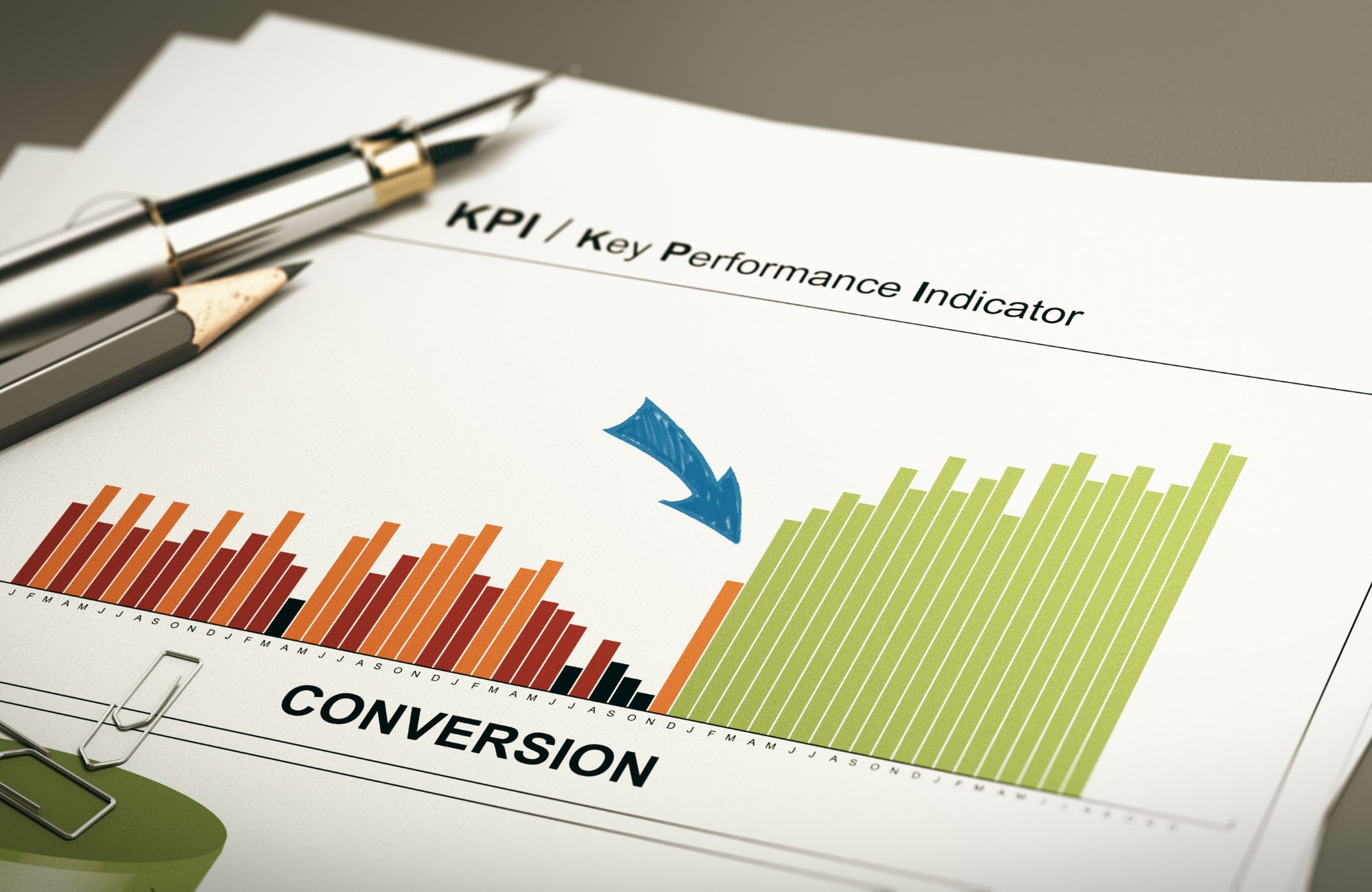
To set up conversion tracking, choose the actions that matter most, create conversion actions in Google Ads or key events in Google Analytics, install the right tag, test each event, and review the data before using it for bidding or reporting. This helps your business see which ads, pages, calls, forms, and purchases create results.
Many businesses spend money on SEO, Google Ads, social ads, and new website pages without knowing what created the lead. Traffic may look strong, but the owner still cannot answer a basic question: which campaign brought the phone call, form submission, booking, or sale?
That is why conversion tracking matters. It connects marketing activity to business goals. It can show whether a user came from Google Ads, organic search, a landing page, or another channel before the conversion occurs.
This guide explains how to set up conversion tracking without turning it into a vague technical checklist. You will learn what to track, which tools to use, how to create conversion actions, how to test tags, and how to avoid misleading data. If your reporting feels unclear, ChitChat Marketing can help you review your tracking setup and identify where campaign data may be missing or misleading.
TL;DR
Conversion tracking measures actions that matter to your business, such as calls, forms, bookings, purchases, and qualified leads. To set it up, define valuable conversions, choose Google Ads, Google Analytics, Google Tag Manager, or your CRM, create the conversion action or key event, install the Google tag or conversion tag, test every event, then use the data to improve campaigns.
Basic Conversion Tracking Setup Steps for Any Business
A simple conversion tracking setup starts with business goals before tags. Choose the actions that prove lead or sales intent, create the correct conversion action, install the Google tag or Google Tag Manager tag, test each event, and review conversion data before making budget or bidding decisions.
- Choose the conversion actions that show real value.
- Decide whether each action belongs in Google Ads, GA4, GTM, call tracking, or your CRM.
- Create the conversion action or a new conversion event.
- Install the Google tag, event snippet, or GTM tag.
- Add form, phone, purchase, and CRM tracking where needed.
- Test every event before using the data.
- Review duplicate events, spam leads, and lead quality each month.
Google’s conversion measurement process also follows a similar setup path: choose where conversions happen, select a data source, create conversion actions, and finish setup.
Key Takeaways
| Point | Details |
| Start with business value | Decide what action shows buying intent before adding code. |
| Use the right platform | Google Ads, GA4, GTM, call tracking, and CRM tools each serve a different role. |
| Separate lead types | Primary conversions should guide reporting and bidding. Secondary events should add context. |
| Test before scaling | A tag can fire and still send weak or duplicate data. |
| Review data often | Website changes, form edits, and new campaigns can break tracking. |
What Is Conversion Tracking?
Conversion tracking is the process of measuring actions people take after they interact with your website, ads, landing pages, or search results. These actions may include phone calls, form submissions, purchases, quote requests, appointment bookings, chat leads, email clicks, or other events that show a user moved closer to becoming a customer.
A conversion can be different for each business. A local contractor may treat a quote request as a conversion. A dental practice may count a new patient form. An e-commerce store may track a purchase value, order ID, transaction ID, and checkout event. Google Ads uses conversion actions to measure customer actions that matter to advertisers. These can include website actions, calls, app actions, and other measurable events.
This matters because conversion tracking is not just an analytics platform task. It is a decision about what your business values. If the wrong action is tracked, the report may look useful while the sales team sees little change.
Why Does Conversion Tracking Matter for Lead Generation?
Conversion tracking matters because it shows which marketing efforts produce calls, forms, bookings, purchases, and qualified inquiries. Without it, your business may keep funding advertising campaigns or website pages that bring visits but do not create sales opportunities. Better tracking helps guide budgets, landing pages, offers, and campaign changes.
A common issue in tracking audits is that reported conversions do not match lead quality. For example, a campaign may count every contact page visit as a lead. That inflates the number in Google Ads reports, but it does not prove that a form submission, booked call, or sale happened.
Good tracking gives each channel a clearer role. A Connecticut HVAC company may track emergency calls, quote forms, and financing requests separately. A law firm may track consultation requests instead of every general contact page visit. An ABA therapy provider may track parent intake forms, phone calls, and insurance-related inquiries.
Pro Tip: Do not count every website action as a conversion. Use primary conversions for actions tied to revenue or qualified leads. Use secondary conversions for actions that only show interest.
This is where ChitChat’s Google Ads management, which turns ad spend into measurable leads, can help. Paid campaigns need more than clicks. They need tracking that shows which searches, ads, and landing pages create the right inquiries.
How Do You Set Up Conversion Tracking in Google Ads?
To set up conversion tracking in Google Ads, open your Google Ads account, create a new conversion action, choose the conversion category, set the conversion name, configure the following settings, install the Google tag or Google Ads conversion tag, and test whether the tag fires when the specific conversion action happens.
Google’s official setup flow for website conversions includes choosing website conversions, adding a website domain, scanning the site, and creating conversion actions inside the Google Ads interface.
Use this practical setup flow:
- In Google Ads, go to Goals or Conversions.
- Create a new conversion action.
- Choose the conversion category, such as lead, purchase, sign-up, or page view.
- Add a clear conversion name.
- Set the conversion value. For purchases, pass dynamic values when possible.
- Choose whether to count one or multiple conversions from the same action.
- Review attribution models and other conversion settings.
- Install the Google tag, event snippet, or Google Ads conversion tag.
- If you use GTM, create a new tag and add the conversion ID and conversion label.
- Click save, test in preview mode, then publish.
A Google Ads conversion tag in Google Tag Manager uses a Conversion ID and Conversion Label. Google Tag Manager’s documentation says these required values are added to their respective fields when setting up Google Ads conversions.
You may also need a conversion linker tag. Google explains that conversion linker tags help tags measure click data so conversions can be measured effectively, and they should be deployed on pages where visitors may land after clicking an ad or promotion.
ChitChat Conversion Tracking Readiness Checklist:
- Do you know your top three lead or sales actions?
- Do you have a thank-you page or a trackable manual event?
- Are forms, calls, and purchases tracked separately?
- Does your CRM store lead source?
- Are existing conversions still accurate after website changes?
- Do purchase actions include transaction ID or order ID?
- Did you test the tag configuration in a browser tab?
- Can your team explain how many conversions matter and why?
SEO services built around traffic, leads, and reporting also depend on this setup. Organic traffic is easier to evaluate when you can see which pages produce inquiries.
ChitChat Conversion Tracking Decision Framework
The best conversion tracking tool depends on what you need to measure. Google Ads helps with ad optimization, GA4 helps with website behavior, Google Tag Manager helps manage events, call tracking helps local service businesses, and CRM tracking connects leads to revenue after the first contact.
| Question | What It Decides | Best Fit |
| Does this action show buying intent? | Primary or secondary conversion | Google Ads or CRM |
| Does the action come from ads? | Paid campaign tracking | Google Ads conversion tracking |
| Does it help with website analysis? | Behavior and key events | GA4 |
| Does it require custom triggers? | Tag and event setup | Google Tag Manager |
| Does lead quality matter after submission? | Sales follow-up and revenue value | CRM or offline conversion import |
| Does it involve phone calls? | Call source and call quality | Call tracking platform |
| Does privacy or data control need more care? | Advanced measurement setup | Enhanced or server-side tracking |
Use Google Analytics when you want broader website behavior data. In GA4, important actions are marked as key events. Google explains that advertisers can create Google Ads conversions from Analytics key events through the Google Ads and Google Analytics workflow.
Use Google Tag Manager when you want cleaner control over tags. For example, you can create a GA4 event tag for a form submission, button click, phone click, or thank-you page. Google Tag Manager also supports Google Ads conversion tags through tag configuration, triggers, and required conversion values.
Enhanced conversions may help improve measurement accuracy when a business has first-party customer data. Google describes enhanced conversions as using hashed first-party, user-provided data from your website when a user converts. Before you enable enhanced conversions, review your consent process, privacy disclosures, and customer data handling.
Some larger accounts may explore server-side Google Ads tracking. This can improve control, but it adds complexity. For most small businesses, the best first step is a setup your team can test, explain, and maintain. Professional web design services that help websites convert visitors into clients can also make tracking easier. Clean forms, buttons, thank-you pages, and website code reduce setup problems.
What Conversions Should Your Business Track?
Your business should track conversions that show meaningful intent or revenue potential. For lead generation, this often means phone calls, quote requests, appointment bookings, consultation forms, chat leads, and qualified CRM updates. For e-commerce, it usually means purchases, checkout starts, purchase value, and product-related events.
Do not treat every action the same. A phone call that lasts two seconds should not carry the same value as a booked consultation. A vendor form submission should not count like a qualified lead. A page view may help with analysis, but it should rarely guide bidding by itself.
| Business Type | Primary Conversions | Secondary Conversions |
| HVAC company | Calls over 60 seconds, quote requests, emergency forms | Financing clicks, service page visits |
| Dental practice | New patient forms, booked visits, and qualified calls | Insurance page visits, directions clicks |
| Law firm | Consultation requests, case review forms, and qualified calls | Practice area views, guide downloads |
| ABA therapy provider | Intake forms, parent calls, consultation requests | Location page visits, insurance page clicks |
| E-commerce store | Purchases, checkout starts, purchase value | Add to cart, product page views |
Pro Tip: If your sales team says the leads are weak, check your conversion settings before raising the budget. The campaign may be optimizing toward the wrong event.
This is also where import conversions can help. If your CRM records which leads became appointments or customers, you can use that data to improve reporting. Offline import should only be used when the source data is organized and reliable.
How Do You Test Conversion Tracking Before Spending More?
You test conversion tracking by completing each action yourself and confirming the correct event appears on the right platform. Submit forms, click phone numbers, complete a test purchase, check thank-you pages, use GTM preview mode, review Google Analytics DebugView, and confirm that Google Ads receives the expected conversion data.
During implementation, the best test is the full lead path. A tag may fire on the page, but the lead may still fail if the CRM source field is missing, the phone number is wrong, or the thank-you page reloads and counts the same action twice.
Use this QA process:
- Open the landing page in a clean browser tab.
- Submit a test form.
- Click phone numbers on desktop and mobile.
- Confirm that the tag fires in GTM preview mode.
- Check Google Analytics real-time reports or DebugView.
- Review the Google Ads conversion status.
- Confirm that the CRM captures source, campaign, and page.
- Remove or label test leads.
- Recheck after form, plugin, theme, or website code changes.
This step protects your budget. If broken tracking feeds an ad platform weak signals, the account may optimize toward the wrong action. That can increase reported conversions without improving qualified inquiries.
What Common Conversion Tracking Mistakes Should You Avoid?
The most common conversion tracking mistakes include tracking weak actions, double-counting leads, missing phone calls, ignoring CRM data, using outdated tags, and failing to test after website updates. These issues can make reports look strong while sales activity stays flat.
Avoid these mistakes:
- Counting every contact page visit as a lead
- Treating short calls as qualified inquiries
- Counting the same action in GA4 and Google Ads twice
- Forgetting the conversion linker
- Using old existing conversions after a site redesign
- Tracking forms but not lead source
- Missing mobile click-to-call actions
- Passing purchase value without transaction ID
- Using unclear conversion names
- Ignoring privacy review before enhanced conversions
Here is a practical example. A med spa may see many form fills, but some may be vendor pitches, incomplete questions, or low-intent price shoppers. If every form counts equally, the report may show success while the schedule does not fill with qualified appointments.
If your reports show conversions but your phone is not ringing with the right leads, ChitChat Marketing can review your tracking, landing pages, and campaign setup to find where the data is breaking down.
My Honest Take on Conversion Tracking
My honest take is that conversion tracking should be fixed before a business scales SEO, Google Ads, or paid social. More traffic does not help much when the owner cannot see which campaign produced qualified calls, booked appointments, purchases, or real sales opportunities.
One pattern I see in audits is that the tracking is technically present, but the setup measures the wrong moment. For example, a form button click may be tracked even when the form fails. That makes the report look active, but it does not prove a lead reached the business.
The strongest tracking setups are not always the most complex. They are the setups that match the sales process. A contractor may need call duration rules. A law firm may need consultation quality notes. An e-commerce store may need dynamic values and order IDs. The right setup depends on how the business operates.
Conclusion
Learning how to set up conversion tracking starts with deciding which actions prove real value. After that, you can create conversion actions, install the right tag, track forms and calls, test each conversion event, and use the data to improve marketing. A clear setup helps your business understand what brings qualified inquiries, not just visits.
ChitChat Marketing helps businesses connect SEO, Google Ads, web design, analytics, and lead generation into one clearer growth system. Clean conversion tracking shows whether your campaigns are producing useful lead and sales data or just surface-level metrics. If you want clearer reporting, contact us for a free consultation.
FAQs
Can one user create more than one conversion?
One user can create more than one conversion if your settings count multiple conversions from the same action. For lead generation, counting one conversion per user action often gives cleaner data.
What is the difference between a conversion tag and a Google tag?
A conversion tag records a specific conversion action, while the Google tag helps send site activity to Google products. Many setups use both, depending on the website and tracking goal.
Do I need a developer to enable conversion tracking?
You may need a developer if your website uses custom forms, checkout flows, or complex website code. Simple setups can often use Google Tag Manager without heavy code edits.
Why does my tag fire, but no conversion appears?
A tag may fire without a conversion appearing if the conversion ID, conversion label, trigger, or account connection is wrong. Reporting delays can also make new conversion data appear later.
Should I track calls as conversions?
Calls should count as conversions when they show real lead intent. Many local businesses use call duration rules so that short taps and accidental calls do not distort reports.
How often should conversion tracking be checked?
Conversion tracking should be checked after campaign launches, website edits, form changes, and tracking updates. A monthly review helps catch broken tags, duplicate events, and missing CRM source data.
Recommended
- How to Measure SEO ROI
- How to Create Landing Pages That Convert
- Best Form Builders for Lead Generation

Thomas Guardado is a seasoned digital marketing and SEO expert with over a decade of hands-on experience helping brands grow their online presence and dominate search results. Based in Connecticut, he specializes in organic search strategy, technical SEO, content optimization, and data-driven campaigns that turn clicks into customers.

Leave a comment