
Streamline your healthcare content creation process
TL;DR:
- Healthcare content requires accuracy, compliance, SEO, and empathetic communication.
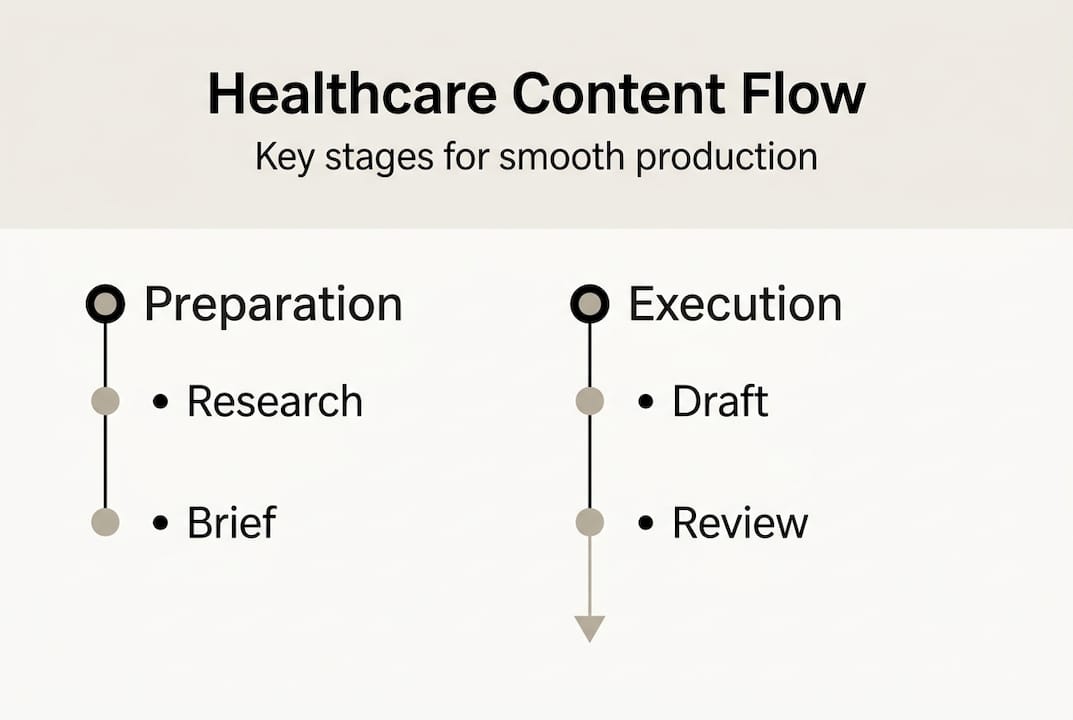
- A clear workflow involves research, briefing, drafting, reviewing, editing, optimizing, and publishing.
- Regular content updates and patient feedback enhance long-term engagement and search performance.
Healthcare marketing managers at ABA therapy practices and dental offices face a real challenge: producing content that is timely, compliant, medically accurate, and engaging enough to drive patient inquiries. That is a tall order, especially when your team is small and your approval process involves multiple stakeholders. The good news is that a structured content creation process can cut through the chaos. This guide walks you through every stage of that process, from research to publishing, with practical tips tailored to healthcare marketing teams that need results without the guesswork.
Table of Contents
- Understanding the essentials of healthcare content creation
- Step-by-step guide to the content creation process
- Overcoming common obstacles in healthcare content creation
- Optimizing and updating your content for lasting results
- What most marketers overlook about healthcare content creation
- Power your healthcare content with expert support
- Frequently asked questions
Key Takeaways
| Point | Details |
|---|---|
| Clear team roles | Assign distinct roles from research to review to streamline content creation and reduce delays. |
| Follow a precise workflow | Use structured stages to ensure both compliance and SEO are met for every piece of healthcare content. |
| Address obstacles proactively | Prepare for stakeholder approval and compliance cycles to maintain speed and accuracy. |
| Update content regularly | Refresh content to improve visibility and maintain industry compliance. |
| Leverage AI and tools | Use AI for personalization and modern tools to optimize and monitor content performance. |
Understanding the essentials of healthcare content creation
Before you build a workflow, you need to understand what makes healthcare content creation different from standard marketing content. It is not just about writing well. It is about writing accurately, compliantly, and with a clear understanding of your audience’s concerns and questions.
Healthcare content must balance several competing demands:
- Medical accuracy: Every claim must be verifiable and reviewed by a qualified professional.
- Regulatory compliance: HIPAA, FTC guidelines, and state-specific rules all apply.
- SEO performance: Content must rank well to attract patients searching for your services.
- Patient trust: The tone must be empathetic and clear, not clinical or dismissive.
To meet all of these demands, you need the right people in the right roles. A typical healthcare content team includes a content strategist, a writer with healthcare experience, a medical expert or clinical reviewer, an editor, and an SEO specialist. Each person owns a specific stage of the process.
| Role | Primary responsibility |
|---|---|
| Content strategist | Topic selection, audience alignment |
| Writer | Drafting and storytelling |
| Medical expert | Clinical accuracy and compliance |
| Editor | Clarity, tone, and structure |
| SEO specialist | Keyword targeting and optimization |
The step-by-step healthcare content creation model confirms that a solid workflow moves through six clear stages: brief/outline, draft, review, edit, optimize, and publish. Skipping any stage creates risk, whether that is a compliance issue or a piece of content that simply does not convert.
“A healthcare content program without a defined workflow is like a clinical protocol without steps. The outcome is unpredictable and often costly.”
Your content marketing strategies should reflect this structure from day one. And when it comes to getting found online, investing time in crafting SEO-friendly blog titles is one of the simplest ways to improve discoverability before a single word of body copy is written.
Step-by-step guide to the content creation process
With the essentials in place, here is how to move through each stage of the workflow in a practical, repeatable way.
- Research: Your SEO specialist identifies high-intent keywords relevant to your practice. For a dental office, that might be “teeth whitening near me” or “pediatric dentist accepting new patients.” For an ABA therapy practice, it could be “ABA therapy for toddlers” or “insurance-covered autism therapy.”
- Brief: The content strategist creates a detailed brief that outlines the target keyword, audience segment, content goal, word count, and required sources. A strong brief saves the writer significant time and reduces revision cycles.
- Draft: The writer produces the first draft based on the brief. This draft should follow the keyword structure and address the patient’s likely questions at each stage of their decision-making journey.
- Review: The medical expert or clinical reviewer reads the draft for accuracy. This is not a light proofread. It is a substantive check for claims that could mislead or harm patients.
- Edit: The editor refines tone, structure, and readability. Healthcare content should be written at a level that patients can understand, typically around a 6th to 8th grade reading level.
- Optimize: The SEO specialist applies on-page optimizations, including meta descriptions, header tags, internal links, and image alt text. Learning writing SEO-friendly content techniques at this stage makes a measurable difference in organic traffic.
- Publish and track: Content goes live and you begin monitoring performance metrics such as organic sessions, bounce rate, time on page, and conversion rate.
The workflow details confirm that assigning swimlanes to each team member, where research belongs to SEO, the brief to the strategist, drafting to the writer, and review to the medical expert, keeps accountability clear and timelines realistic.
| Stage | Owner | Suggested timeline |
|---|---|---|
| Research | SEO specialist | 2 to 3 days |
| Brief | Content strategist | 1 day |
| Draft | Writer | 3 to 5 days |
| Review | Medical expert | 2 to 3 days |
| Edit and optimize | Editor and SEO | 2 days |
Pro Tip: Use a shared project management tool like Asana or Trello to track each piece of content through the workflow. Visibility prevents bottlenecks and keeps your publishing schedule on track. Pair this with a solid understanding of SEO on your website to ensure every published piece is working toward your traffic goals.
Overcoming common obstacles in healthcare content creation
Even with a clear workflow, healthcare marketing teams run into predictable obstacles. Knowing what they are, and how to handle them, keeps your content program moving.
The most common bottlenecks include:
- Multi-stakeholder approvals: Healthcare content often requires sign-off from clinical directors, compliance officers, and practice managers. This can mean 5 to 7 approval cycles before a single piece goes live, adding weeks to your timeline.
- Compliance uncertainty: Writers without healthcare backgrounds may inadvertently include claims that violate FTC or HIPAA guidelines. This forces rewrites and delays.
- Inconsistent brand voice: When multiple writers contribute content, tone and messaging can drift, confusing patients and diluting your brand.
- AI-generated content risks: AI tools can speed up drafting, but they can also produce inaccurate medical claims that slip past busy reviewers.
To keep your process agile, build compliance checkpoints directly into your brief template. When writers know the rules before they start, you reduce the number of corrections needed at the review stage.
“The practices that scale their content fastest are the ones that front-load compliance education for their writers, not their reviewers.”
For dental offices specifically, SEO marketing for dentists requires staying current with how search engines interpret medical content, especially after Google’s helpful content updates. Similarly, ABA therapy practices benefit from understanding AI search optimization to ensure their content surfaces in AI-powered search results.
Pro Tip: Create a one-page compliance cheat sheet for every writer on your team. List the claims that require clinical review, the phrases to avoid, and the sources that are pre-approved for citation. This alone can cut your review cycles in half.
Address the content creation challenges head-on by building review windows into your editorial calendar rather than treating them as unexpected delays.

Optimizing and updating your content for lasting results
Publishing content is not the finish line. For healthcare marketing teams, the real work begins after a piece goes live.
Here is how to keep your content performing over time:
- Audit your content quarterly: Review your top-performing pages for accuracy, keyword relevance, and compliance. Medical guidelines change, and outdated content can damage patient trust and search rankings.
- Refresh underperforming pages: If a blog post is not generating traffic after 90 days, update the title, add new data, expand the word count, and improve the internal linking structure.
- Monitor key metrics: Track organic sessions, average position in Google Search Console, click-through rate, and time on page. These signals tell you whether your content is resonating or needs attention.
- Apply on-page SEO updates: Use your on-page SEO checklist to ensure every updated piece includes optimized headers, meta descriptions, and schema markup where applicable.
- Leverage AI strategically: AI for personalization is now a top priority for nearly 49% of marketing managers, and healthcare is no exception. AI tools can help you tailor content to specific patient segments, but always pair AI output with human clinical review.
Best practices for ongoing content maintenance:
- Set calendar reminders for content reviews every 90 days.
- Flag content that references specific statistics or guidelines for priority review.
- Use heatmaps and session recordings to understand how patients interact with your pages.
- Build internal links from new content to older, high-value pages to distribute authority across your site.
Pro Tip: Pair your content refresh strategy with SEO with AI strategies to identify which pages have the highest potential for recovery with minimal effort. Tools like Semrush or Ahrefs can surface quick wins in minutes.
What most marketers overlook about healthcare content creation
Here is something that rarely gets said: following a workflow perfectly does not guarantee results. The practices that consistently generate patient inquiries from their content are the ones that treat content creation as an ongoing conversation, not a checklist.
We have seen ABA therapy teams produce technically flawless content that generates zero engagement because it was written for search engines, not for worried parents researching options for their children. We have seen dental offices publish beautifully optimized blog posts that never convert because the content does not connect to the patient’s actual fear or question.
The real differentiator is feedback. Your front desk staff, your clinical team, and your existing patients are telling you what questions they have every single day. That intelligence should feed directly into your content briefs. When you improve website SEO by grounding your content in real patient conversations, you create pieces that rank and convert. The workflow matters. But the insight behind it matters more.
Power your healthcare content with expert support
You now have a clear picture of what an effective healthcare content creation process looks like, from building your team and workflow to optimizing and refreshing content over time. The next step is putting it into practice with the right support behind you.
At ChitChat Marketing LLC, we help ABA therapy practices and dental offices build content programs that generate qualified patient leads through SEO and Google Ads. Whether you need [SEO optimization tips](https://chitchatmarketingllc.com/seo optimization tips) to sharpen your existing content or access to digital marketing tools that accelerate your results, we have the resources to help your team move faster and smarter.
Frequently asked questions
What is the best workflow for healthcare content creation?
A structured workflow moves through research, briefing, drafting, clinical review, editing, SEO optimization, and publishing, with clear workflow stages assigned to specific team members at each step.
How do compliance reviews impact content timelines?
Compliance reviews are one of the biggest causes of delays, often requiring 5 to 7 approval cycles that can extend a single content piece’s timeline by several weeks.
How important is updating old content in healthcare marketing?
Refreshing outdated content is essential because medical guidelines evolve, search algorithms shift, and regularly updated content consistently outperforms static pages in both rankings and patient trust.
What role does AI play in the content creation process for healthcare?
AI is increasingly used to personalize content and improve efficiency, with nearly 49% of managers making it a top priority, though human clinical review remains essential for accuracy and compliance.
Recommended
- Scalable content that builds trust and relationships. – ChitChat Marketing LLC
- How to Create a Content Calendar That Actually Works – ChitChat Marketing LLC
- Content Marketing Archives – ChitChat Marketing LLC
- Create a Social Media Plan That Attracts Leads and Drives Sales Online – ChitChat Marketing LLC